
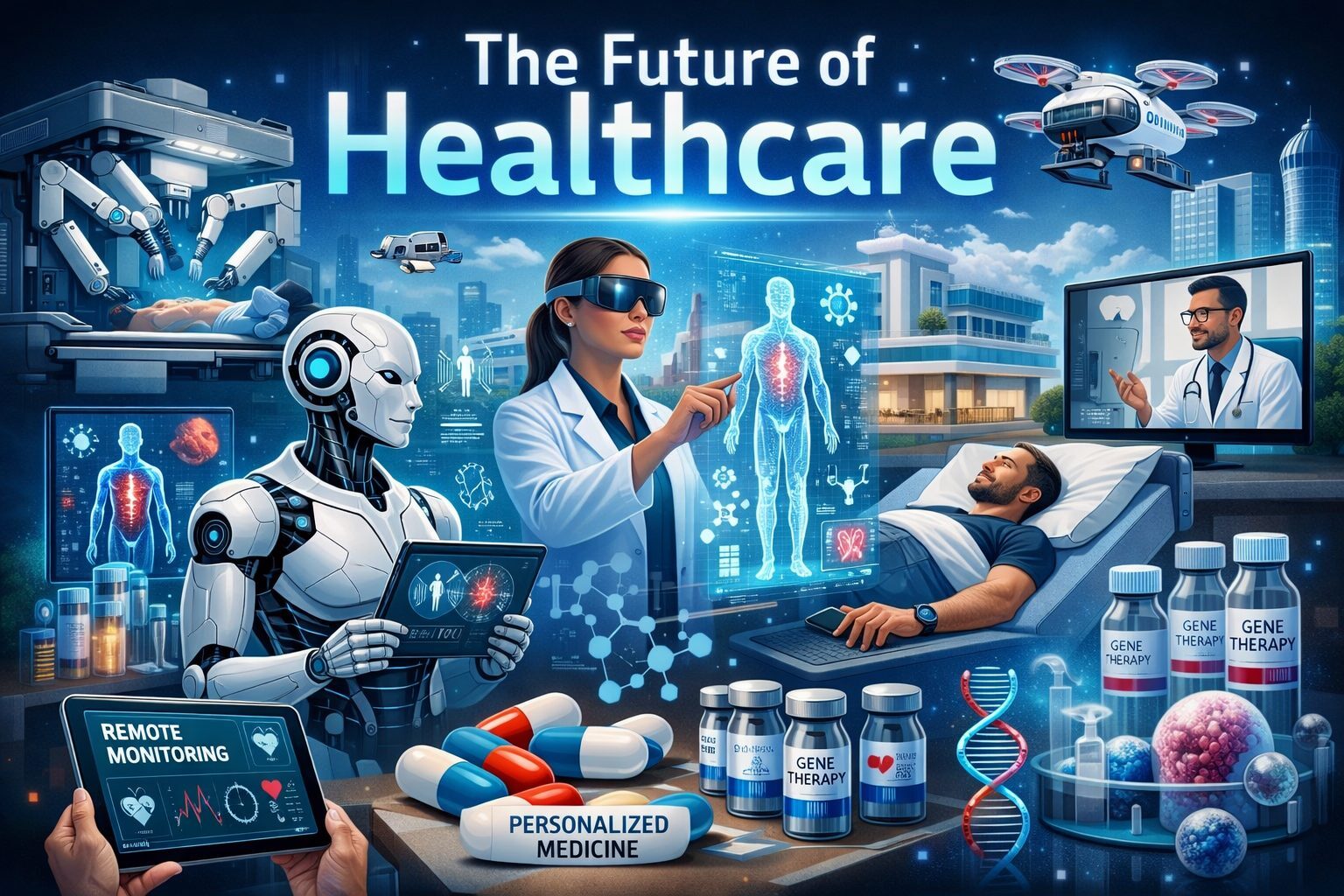
Why Medical Innovation May Outperform Broader Markets in the Years Ahead
Here’s the uncomfortable reality facing investors today: the age of simply buying index funds and riding the market higher may be coming to an end. With the national debt spiraling past $37 trillion and interest payments consuming larger portions of the federal budget each year, the broad market faces serious headwinds. The companies dragging down index performance—zombie corporations, overleveraged businesses, and sectors in terminal decline—could weigh on returns for years.
But markets don’t move in straight lines, and not all sectors face the same challenges. While some industries struggle with debt burdens and declining relevance, others are solving fundamental problems that create value regardless of macro conditions. Healthcare innovation sits squarely in the latter category.
Think about the dynamics at play. No matter what happens with interest rates or GDP growth, people will still get sick. They’ll still need treatment. They’ll still demand better outcomes. What’s changing—and changing fast—is how we treat disease. The companies leading this transformation with gene therapies, AI-driven drug discovery, and precision medicine aren’t just incremental improvements. They’re category creators building entirely new markets.
This creates an environment where stock selection matters more than it has in decades. The index might struggle under macro pressure, but individual companies solving critical healthcare problems with breakthrough technology can deliver substantial returns even in challenging economic conditions.
The Historical Precedent: When Indexes Go Nowhere for Decades
Before diving into the healthcare opportunities, it’s important to understand why index investing may face serious challenges ahead. This isn’t speculation—we’ve seen it happen before.
The 1966-1982 Secular Bear Market: A Cautionary Tale
From roughly 1966 to 1982, U.S. equities went through a prolonged sideways market that devastated buy-and-hold index investors. The Dow Jones Industrial Average first approached 1,000 in early 1966. It didn’t break through that level in any durable way until late 1982—16 years later.
Think about that. Sixteen years of going nowhere. The Dow oscillated between roughly 577 and 1,000 in a broad trading range, repeatedly hitting the ceiling near 1,000 and then rolling over into grinding bear markets. One market historian described this era as “multiple dull, slow bull markets that kept stalling near 1,000, separated by grinding gut-wrenching bear markets.”
The Brutal Math of Inflation-Adjusted Returns
The nominal numbers look bad enough. From 1966 to 1981, the S&P 500’s total return was only about 33%—a compound annual growth rate of approximately 1.8%. But the real damage came from inflation.
With CPI running between 5% and 15% for much of the 1970s, those nominal gains translated into significant real losses in purchasing power. An investor who put $10,000 into the S&P 500 in 1966 and held through 1981 had less buying power at the end than they started with, even after collecting dividends for 15 years.
Why Did It Happen? The Three Toxic Ingredients
- Persistent Inflation and Rising Interest Rates
This period saw inflation that would shock today’s investors. The Federal Reserve, under Chair Paul Volcker, eventually pushed short-term interest rates to nearly 20% by 1980-81 to break the inflationary spiral. High inflation and high interest rates are poison for stock valuations.
- Valuation Compression
Corporate earnings and dividends actually grew in nominal terms during this period. Companies were making more money. But it didn’t matter for stock prices because valuations collapsed. The market P/E ratio fell from above 20 in the mid-1960s to below 10 by 1982.
This is the dynamic that destroys index investors—when earnings grow but multiples contract, stock prices go nowhere or decline. You’re fighting a headwind where fundamental improvement doesn’t translate into returns.
- Rolling Recessions and Policy Uncertainty
The era was punctuated by repeated recessions, oil shocks, and policy uncertainty. There were several powerful cyclical rallies embedded within the secular bear market—enough to give investors hope before the next crash arrived. The psychological toll of repeated false starts was enormous.
The Parallels to Today Are Uncomfortable
Look at the conditions that created the 1966-1982 secular bear market, and then look at today:
Then: Persistent inflation running 5-15% annually
Now: Inflation that proved more persistent than expected, with structural pressures (deglobalization, energy transition, labor shortages) that could keep it elevated
Then: Federal Reserve forced to maintain high interest rates to combat inflation
Now: Interest rates normalized from the zero-rate era, with limited room to cut if recession hits while inflation remains above target
Then: High government debt and deficits from Vietnam War and Great Society programs
Now: National debt exceeding $37 trillion with trillion-dollar annual deficits becoming structural, not cyclical
Then: Valuation multiples compressing from peak levels
Now: Market valuations by many measures at or near historical highs, vulnerable to compression if economic conditions deteriorate
Then: Political and policy uncertainty
Now: Significant political polarization, trade tensions, and fiscal policy uncertainty
What Worked When Indexes Failed
Here’s the crucial lesson: even during the 1966-1982 period, individual stocks and sectors performed well. The problem wasn’t that all companies struggled—it was that the index struggled because of valuation compression and sector rotation.
Companies with: – Strong pricing power that could pass inflation through to customers – Real assets that appreciated with inflation (energy, commodities, real estate) – Secular growth trends independent of the economic cycle – Low debt and strong cash generation
These companies delivered solid returns even while the broad indexes went nowhere. Stock selection mattered enormously. Investors who could identify companies with genuine competitive advantages and reasonable valuations did fine. Those who just owned the index suffered.
How It Ended—And What That Tells Us
The 1966-1982 secular bear finally ended when Fed Chair Paul Volcker broke inflation through aggressive tightening, despite causing back-to-back recessions in the early 1980s. Once inflation expectations were crushed and interest rates began falling from extreme levels, valuations could expand again.
This launched the powerful secular bull market that began in 1982 and ran, with some interruptions, into the 2000s. But note what it took: a complete regime change in monetary policy and inflation expectations.
We may not get that clean break this time. The debt dynamics are more challenging. The political will for truly painful inflation-fighting measures is questionable. The structural inflation pressures may be more persistent.
The Investment Implication
This history matters because it establishes that long periods of index underperformance are not hypothetical—they’re historical fact. And they tend to occur when the macro environment combines high debt, inflation pressures, valuation compression, and policy uncertainty.
That’s the environment we may be entering now. If broad indexes face a challenging decade ahead due to macro headwinds and valuation compression, you need exposure to companies that can deliver earnings growth and pricing power independent of those macro forces. Companies solving fundamental problems with innovative technology—creating new markets rather than fighting for share in mature ones.
Let’s look at ten categories of medical innovation reshaping the healthcare landscape and creating what looks like genuine investment opportunities for those willing to do the financial analysis and due diligence required to invest in them.
1. Gene Therapies & Gene Editing: Permanent Solutions to Genetic Disease
What’s Actually Happening
For the first time in human history, we can edit the DNA instructions that cause inherited diseases. Companies like CRISPR Therapeutics, Intellia Therapeutics, and Editas Medicine use molecular tools to cut out disease-causing genes and replace them with functioning versions.
This isn’t theoretical. Sarepta Therapeutics is already treating patients with Duchenne muscular dystrophy—a devastating disease that typically kills young men in their twenties. Rocket Pharmaceuticals targets rare genetic disorders once considered untreatable. Newer players like Beam Therapeutics and Verve Therapeutics are developing more precise editing technologies like base editing and prime editing.
The Economics That Matter
Gene therapy treatments can cost hundreds of thousands to millions of dollars per patient. That price point sounds absurd until you understand what you’re buying—a one-time cure versus a lifetime of symptom management. Insurance companies and healthcare systems are increasingly willing to pay for permanent solutions that eliminate decades of ongoing treatment costs.
The market opportunity here isn’t small. Rare disease affects roughly 300 million people globally. Even capturing a fraction of that market with effective therapies creates substantial revenue potential. Companies that succeed won’t just save lives—they’ll create entirely new pharmaceutical markets worth tens of billions.
Investment Considerations
This sector carries significant binary risk. Clinical trials can fail. Regulatory approval isn’t guaranteed. But the companies that do succeed face limited competition for specific genetic diseases and can command premium pricing with strong intellectual property protection.
2. RNA Medicines: Programmable Therapeutics
What’s Actually Happening
The COVID vaccines from Moderna and BioNTech demonstrated that mRNA technology works at scale, but that was just proof of concept. The real opportunity lies in applying the same platform to other diseases.
RNA technology is essentially programmable medicine. You can send genetic instructions to cells telling them to make specific proteins, stop making others, or attack particular threats. Companies like Alnylam Pharmaceuticals and Arrowhead Pharmaceuticals are using different RNA approaches to treat rare liver diseases, high cholesterol, and cardiovascular conditions. Ionis Pharmaceuticals has been building this platform for decades and now has multiple approved therapies on the market.
The Economics That Matter
Once you’ve mastered the basic RNA platform, you can theoretically target almost any disease by changing the genetic instructions you deliver. This creates operating leverage—the R&D infrastructure and manufacturing capabilities you build for one drug can be applied to many others.
The COVID vaccines proved that RNA therapies can be manufactured at scale and distributed globally. Now these platforms are being applied to cancer, metabolic disease, rare genetic disorders, and chronic conditions. We’re looking at a technology that could generate hundreds of distinct treatments over the next decade.
Investment Considerations
Platform companies with multiple programs in development offer better risk-adjusted returns than single-product bets. The companies that have already navigated regulatory approval and demonstrated commercial manufacturing capability are further along the risk curve than pure R&D plays.
3. Precision Oncology: Early Detection and Targeted Treatment
What’s Actually Happening
Cancer treatment is shifting from one-size-fits-all chemotherapy to personalized approaches based on the genetic profile of each tumor. This requires two things: early detection and precise matching of treatments to specific cancer mutations.
Guardant Health and Natera have developed liquid biopsy tests that detect tumor DNA fragments in blood—sometimes catching cancer before traditional imaging can see it. Exact Sciences is making cancer screening accessible through simple tests like Cologuard. Tempus AI uses artificial intelligence to analyze medical data and match patients with treatments most likely to work for their specific cancer.
Illumina provides the DNA sequencing technology that makes all of this possible, while pharmaceutical giants like Roche are integrating these insights into comprehensive cancer care platforms.
The Economics That Matter
Cancer is a $200+ billion global market, and it’s growing as populations age. Early detection dramatically improves survival rates, which means payers—insurance companies and healthcare systems—have strong incentives to cover these tests. The economics work because catching cancer at Stage 1 instead of Stage 4 saves hundreds of thousands in treatment costs while improving outcomes.
Personalized treatment also reduces wasteful spending on therapies that won’t work for a particular patient’s cancer. When you can identify which treatment has the highest probability of success before you start, you improve outcomes while reducing costs.
Investment Considerations
The regulatory pathway for diagnostic tests is generally faster than for new drugs. Companies with FDA-approved tests and reimbursement coverage from major insurers have de-risked their commercial model. Market leaders with large databases of cancer genomics also have network effects—the more data they collect, the better their algorithms become at predicting treatment response.
4. AI-Driven Drug Discovery: Reducing Time and Cost
What’s Actually Happening
Drug development traditionally takes 10-15 years and costs over $2 billion, with most candidates failing along the way. AI is changing this equation by testing millions of potential combinations computationally before ever synthesizing molecules in a lab.
Recursion Pharmaceuticals uses robotics and machine learning to screen potential drug candidates at scale, identifying patterns human scientists might miss. Schrödinger employs advanced computer simulations to predict how drug molecules will behave in the body. AbCellera demonstrated the speed advantage during COVID-19, helping discover an antibody treatment in just 11 days using AI-driven methods.
European players like Evotec and BenevolentAI are building AI drug discovery capabilities that major pharmaceutical companies are scrambling to access through partnerships and licensing deals.
The Economics That Matter
If AI can cut development time in half while doubling success rates—and there’s early evidence it can—that’s transformational for pharmaceutical economics. The companies that master this technology won’t necessarily develop drugs themselves. Many will become essential partners to every major pharma company in the world, licensing their AI platforms and collecting milestone payments and royalties on successful drug approvals.
This creates a different kind of investment opportunity than traditional biotech. Rather than betting on individual drug candidates with binary outcomes, you’re investing in tools that the entire industry needs to remain competitive—similar to the infrastructure plays we’ve discussed in AI and data centers.
Investment Considerations
Platform companies with multiple partnerships and validated technology have better risk profiles than single-program developers. Companies that have already demonstrated their AI tools can discover FDA-approved drugs command higher valuations because they’ve proven the concept works in practice, not just theory.
5. Clinical Trial Enablement & Outsourced R&D: The Infrastructure Play
What’s Actually Happening
Every drug that reaches market goes through extensive clinical trials. Every medical device needs testing. Every biotech company needs laboratory services and data analysis. Specialized companies handle this more efficiently than pharmaceutical companies can manage in-house.
Medpace, IQVIA, and ICON run clinical trials. Charles River Laboratories provides essential research models and testing services. Thermo Fisher Scientific and Laboratory Corporation of America supply the analytical tools and diagnostics that underpin medical research. European companies like SGS and Eurofins Scientific offer similar services globally.
The Economics That Matter
This is the “picks and shovels” investment thesis applied to healthcare innovation—much like the infrastructure companies benefiting from the AI revolution. These companies profit whether a specific drug succeeds or fails. When gene therapy expands, they benefit. When RNA medicine grows, they benefit. When AI-discovered drugs need testing, they benefit.
It’s a more defensive way to capture the growth in healthcare innovation because you’re not betting on individual therapeutic outcomes. You’re investing in the infrastructure that all of healthcare innovation depends on.
Investment Considerations
These companies typically trade at premium valuations because of their recurring revenue, high switching costs, and essential service positioning. They’re less volatile than pure biotech plays but still capture growth from the overall expansion of healthcare R&D spending. In uncertain markets, they offer a safer way to maintain exposure to medical innovation.
6. Medical Robotics & Surgical Automation: Improving Outcomes at Scale
What’s Actually Happening
Robotic surgical systems can make movements too precise for human hands—think suturing blood vessels the width of a pencil lead. Intuitive Surgical pioneered this market with the da Vinci surgical system, now used in millions of procedures worldwide.
But the market is expanding beyond Intuitive. Medtronic, Stryker, and Zimmer Biomet are bringing robotics to joint replacement and spine surgery. Johnson & Johnson is investing billions in surgical robotics. Smaller companies like PROCEPT BioRobotics focus on automating specific procedures like prostate treatment, while Stereotaxis uses magnetic guidance for catheter-based procedures.
The Economics That Matter
The data shows robotic surgery often leads to better outcomes, faster recovery, and fewer complications. As hospitals see these results, adoption accelerates. But here’s what makes the business model particularly attractive—the razor-blade economics.
Companies sell the robot system (the capital equipment), then generate ongoing revenue from the specialized instruments used in each procedure. Once a hospital has made a million-dollar investment in a robotic system and trained its surgeons, switching costs are enormous. This creates recurring revenue streams with high margins.
Investment Considerations
Market leaders benefit from installed base advantages and surgeon training ecosystems. As more surgeons become proficient on a particular platform, hospitals face pressure to adopt that system. This creates network effects that are difficult for new entrants to overcome without meaningfully superior technology.
7. Cardiometabolic Medicine: The GLP-1 Revolution
What’s Actually Happening
Novo Nordisk and Eli Lilly have developed GLP-1 drugs (Wegovy, Ozempic, Mounjaro, Zepbound) that are genuinely effective for weight loss—helping people lose 15-20% of body weight by regulating appetite and metabolism at a hormonal level.
But the story goes beyond weight loss. These drugs are showing benefits for heart disease, kidney disease, sleep apnea, and potentially even addiction. Viking Therapeutics is developing next-generation options. Giants like Pfizer and Amgen are rushing their own versions to market.
The Economics That Matter
Over 40% of American adults are obese. Globally, metabolic disease is epidemic. We’re looking at a market that could exceed $100 billion annually within a few years. And we’re still early—these drugs are becoming more effective, more convenient (moving from injections to pills), and manufacturing is scaling to meet demand.
The pharmaceutical revenues generated by GLP-1 drugs are already reshaping the economics of both Novo Nordisk and Eli Lilly. Their market capitalizations have surged as investors recognize the scale of this opportunity.
Investment Considerations
The market leaders have enormous advantages from manufacturing scale, clinical data, and distribution infrastructure. But there’s room for follow-on competitors if they can demonstrate differentiation through better efficacy, reduced side effects, oral formulations, or lower costs. The market is large enough to support multiple winners.
8. Radiopharmaceuticals / Radioligand Therapy: Precision Radiation Delivery
What’s Actually Happening
Radioligand therapy attaches radioactive particles to molecules that seek out specific cancer cells, delivering targeted radiation that kills tumors while largely sparing healthy tissue. It’s one of the most sophisticated cancer treatment approaches ever developed.
Novartis has approved treatments for certain neuroendocrine tumors and prostate cancer. Lantheus Holdings supplies the radioactive isotopes. Smaller companies like Telix Pharmaceuticals (Australian-based), Perspective Therapeutics, and Actinium Pharmaceuticals are developing therapies for additional cancer types.
The Economics That Matter
Radioligand therapy represents a shift from systemic chemotherapy that damages the whole body to precision strikes targeting malignant cells. As the technology improves and expands to more cancer types, adoption is growing rapidly.
This is a small market now—but it’s growing at triple-digit percentage rates. The companies positioned in this space are essentially creating new treatment categories with limited competition.
Investment Considerations
This is a higher-risk, higher-potential-return segment. The technology is proven but still relatively early in adoption. Companies with multiple programs addressing different cancer types offer better risk diversification than single-indication players. Partnerships with larger pharmaceutical companies can validate technology and provide development capital.
9. Connected Care & Care Anywhere: Continuous Monitoring
What’s Actually Happening
Healthcare is moving from periodic doctor visits to continuous monitoring at home. DexCom and Abbott Laboratories make continuous glucose monitors that revolutionized diabetes management by sending real-time data to smartphones. Insulet makes tubeless insulin pumps that integrate with monitors for automated delivery—essentially an artificial pancreas.
iRhythm Technologies monitors heart rhythm continuously to catch dangerous arrhythmias before they cause strokes. ResMed provides connected devices for sleep apnea. Teladoc brings doctor visits to phones. Masimo is developing non-invasive sensors for multiple vital signs.
The Economics That Matter
The COVID pandemic accelerated a decade of adoption in remote healthcare. People who’ve experienced the convenience of care at home don’t want to return to the old model. More importantly, continuous monitoring catches problems earlier when they’re cheaper and easier to treat.
Insurance companies are increasingly willing to cover these devices because they reduce expensive emergency room visits and hospitalizations. The companies benefit from recurring revenue—continuous glucose monitors need new sensors every week or two, creating predictable consumables revenue.
Investment Considerations
Companies with FDA clearance and insurance reimbursement have de-risked their business models. Those with strong data on improved patient outcomes can expand coverage and adoption. The recurring revenue from consumables creates more stable, predictable earnings than one-time device sales.
10. Rare & Chronic Disease Therapeutics: Orphan Drug Economics
What’s Actually Happening
Companies like BioMarin, Ultragenyx, and Amicus Therapeutics focus on rare genetic disorders where families are desperate for effective treatment. Vertex Pharmaceuticals essentially cured cystic fibrosis for most patients with its CFTR modulators—one of the most successful rare disease programs in history.
argenx is developing treatments for rare autoimmune diseases. Regeneron and AbbVie have blockbuster drugs for inflammatory conditions. Biogen focuses on neurological diseases. AstraZeneca brings a diversified portfolio across rare and chronic conditions.
The Economics That Matter
Here’s the counterintuitive reality: rare disease drugs often have better economics than mass-market drugs. There’s less competition, faster regulatory approval through orphan drug designation, premium pricing, and fierce patient loyalty.
When your drug is the only treatment for a life-threatening condition, price becomes secondary to access. Many of these companies generate hundreds of millions in revenue from relatively small patient populations—thousands rather than millions of patients.
Investment Considerations
Companies with multiple approved therapies have more stable revenue bases than single-product companies. Those with robust pipelines addressing several rare diseases offer growth without single-drug dependency. The regulatory pathway for orphan drugs can be faster, reducing time to market and de-risking development.
Why This Matters for Today’s Investment Environment
Let me connect this back to the macro picture that’s shaping portfolio strategy.
For years, index investing made sense because the market consistently delivered 8-10% returns with minimal effort. But several factors are converging to make that approach more challenging.
The national debt exceeds $37 trillion and growing. Interest payments alone now exceed defense spending—over $1 trillion annually. With interest rates normalized from their decade-long zero-rate environment, debt service costs will consume increasing portions of the federal budget. This creates fiscal drag that could weigh on broad market returns for years.
Many companies in major indices face structural headwinds—overleveraged balance sheets in a higher-rate environment, declining relevance in changing markets, or business models that don’t work without cheap capital. These companies drag on index performance.
But truly innovative companies create value independent of these macro challenges. A company that cures a genetic disease doesn’t need low interest rates to succeed. A breakthrough cancer diagnostic will find demand regardless of GDP growth. Companies solving fundamental human problems with revolutionary technology can deliver substantial returns even in challenging economic conditions.
That’s why healthcare innovation is particularly compelling right now. You’re not betting on the broader economy—you’re betting on human ingenuity solving problems that affect billions of people—similar to how we’re approaching the AI infrastructure revolution.
The Stock Selection Framework
The companies I’ve outlined across these ten categories aren’t guaranteed winners—some will succeed spectacularly, others will fail. That’s the nature of innovation. But taken together, they represent a way to capture the healthcare transformation while managing risk through diversification.
Here’s how this fits into a broader investment approach:
Core Infrastructure (25-30% of healthcare allocation): Companies in the picks-and-shovels category—clinical trial operators, laboratory services, medical device platforms. These benefit from overall healthcare innovation regardless of which specific therapies succeed.
Direct Innovation (40-50% of healthcare allocation): Leading companies in gene therapy, RNA medicine, precision oncology, and AI drug discovery that are creating new treatment categories. This is where the biggest potential returns sit, but also the highest individual company risk.
Defensive Healthcare (20-25% of healthcare allocation): Established pharmaceutical companies, diversified medical device makers, and healthcare infrastructure companies with exposure to innovation but more stable revenue bases.
Emerging Opportunities (5-10% of healthcare allocation): Early-stage areas like radiopharmaceuticals, connected care devices, and orphan drug developers that offer asymmetric return potential.
This framework captures the growth potential of medical innovation while maintaining enough diversification to survive individual company failures. No single position represents more than a few percent of the overall portfolio, ensuring that even complete losses on individual names don’t materially impact overall returns.
Detailed Allocation Framework
For large portfolios that require a number of individual companies to diversify specific company risk, a structure I use such as the following makes sense:
TIER 1: Core Infrastructure (25-30% of Healthcare Allocation)
Investment Thesis: These companies profit regardless of which specific therapies succeed. They provide essential services that all healthcare innovation depends on.
Category 5: Clinical Trial Enablement & Outsourced R&D
15-20% of healthcare portfolio
Large-Cap Core Holdings (5-7% each):
- Thermo Fisher Scientific (TMO) – Largest position. Provides essential tools and services across all life sciences research. $200B+ market cap, consistent double-digit revenue growth.
- IQVIA (IQV) – Leading clinical trial operator with data analytics capabilities. Essential partner for virtually every major drug approval.
- Laboratory Corporation of America (LH) – Diagnostic testing infrastructure supporting both research and clinical care.
Mid-Cap Holdings (2-3% each):
- Charles River Laboratories (CRL) – Essential research models and early-stage testing services. High switching costs.
- Medpace (MEDP) – Fast-growing clinical trial specialist with focus on complex therapeutic areas.
- ICON plc (ICLR) – Global trial operator with European strength.
Smaller Positions (1-2% each):
- Fortrea (FTRE) – Newer entrant, spun from LabCorp. Good growth but less established.
- SGS SA (SGSOY) – European exposure, testing and certification services.
- Eurofins Scientific SE (ERFSF) – Laboratory testing with focus on pharmaceutical development.
Position Sizing Rationale: These companies have the most predictable revenue streams in healthcare innovation. Size positions based on market cap, regulatory moat, and customer concentration. TMO and IQVIA should be largest positions given their dominance and diversification.
Category 6: Medical Robotics & Surgical Automation (Infrastructure Component)
5-10% of healthcare portfolio
Large-Cap Core Holdings (3-5% each):
- Intuitive Surgical (ISRG) – Dominant market leader. Installed base creates recurring instrument revenue. Premium valuation justified by moat.
- Stryker (SYK) – Diversified medical device company with strong robotics presence. More defensive than pure-play robotics.
- Medtronic (MDT) – Global scale, diversified across multiple surgical specialties. Lower growth but more stable.
Mid-Cap Holdings (1-2% each):
- Johnson & Johnson (JNJ) – Massive R&D investment in surgical robotics. Defensive healthcare exposure with innovation upside.
- Zimmer Biomet (ZBH) – Joint reconstruction focus. Reasonable valuation.
- Globus Medical (GMED) – Spine-focused robotics. Strong growth trajectory.
Smaller Positions (0.5-1% each):
- PROCEPT BioRobotics (PRCT) – Prostate procedure specialist. Higher risk but category creator.
- Smith+Nephew (SNN) – European medical device company with robotics expansion.
- Stereotaxis (STXS) – Magnetic catheter guidance. Very small cap, high risk.
- Accuray (ARAY) – Radiation therapy systems. Speculative.
Position Sizing Rationale: ISRG should be the largest position given its dominant market position and razor-blade business model. SYK and MDT offer more defensive exposure. Smaller companies are options for investors seeking higher growth with higher risk tolerance.
TIER 2: Direct Innovation (40-50% of Healthcare Allocation)
Investment Thesis: Companies creating entirely new treatment categories. Highest potential returns but significant individual company risk. Diversification across multiple approaches essential.
Category 1: Gene Therapies & Gene Editing
10-15% of healthcare portfolio
Leading Positions (2-3% each):
- Vertex Pharmaceuticals (VRTX) – [Note: Listed in Category 10 but belongs here] – Most de-risked gene therapy play. Multiple approved CF therapies generating billions in revenue.
- CRISPR Therapeutics (CRSP) – Leading CRISPR platform with approved sickle cell therapy. Platform approach reduces single-drug risk.
- Intellia Therapeutics (NTLA) – In vivo gene editing (treats patients directly rather than removing cells). Differentiated approach.
Established Clinical-Stage (1-2% each):
- Sarepta Therapeutics (SRPT) – Multiple approved Duchenne MD therapies. Revenue-generating with pipeline upside.
- BioMarin Pharmaceutical (BMRN) – [Note: Listed in Category 10] – Multiple approved rare disease therapies including gene therapy. More diversified than pure-plays.
Development-Stage Platforms (1% each or less):
- Beam Therapeutics (BEAM) – Base editing technology (more precise than CRISPR). No approved therapies yet.
- Editas Medicine (EDIT) – CRISPR platform competing with CRSP and NTLA. Behind leaders.
- Rocket Pharmaceuticals (RCKT) – Gene therapy for rare diseases. Clinical-stage.
- uniQure (QURE) – Gene therapy specialist. Financial challenges, high risk.
- bluebird bio (BLUE) – Gene therapy pioneer but execution issues. Turnaround play.
- Verve Therapeutics (VERV) – In vivo base editing for cardiovascular disease. Very early stage.
Position Sizing Rationale: VRTX is the lowest-risk position with proven commercial success. CRSP and NTLA have validated technology but less commercial de-risking. Later-stage companies like SRPT and BMRN offer revenue stability with pipeline upside. Development-stage companies should be kept small (1% or less) given binary clinical trial risk.
Category 2: RNA Medicines
8-12% of healthcare portfolio
Leading Positions (2-3% each):
- Alnylam Pharmaceuticals (ALNY) – Multiple approved RNAi therapies. Commercial leader with strong pipeline.
- Moderna (MRNA) – Proven mRNA manufacturing at scale. Diversifying beyond COVID. Volatile but high potential.
- Ionis Pharmaceuticals (IONS) – Pioneer in antisense therapy. Multiple approved drugs and royalty streams.
Emerging Leaders (1-2% each):
- Arrowhead Pharmaceuticals (ARWR) – RNAi platform with promising pipeline. No approved products yet but strong clinical data.
- BioNTech (BNTX) – mRNA platform with cancer focus post-COVID. European base adds diversification.
Higher Risk Platforms (0.5-1% each):
- CureVac (CVAC) – mRNA technology struggled in COVID but still developing platform. Speculative.
Position Sizing Rationale: ALNY and IONS have the most de-risked commercial models with approved therapies and revenue. MRNA offers massive upside if pipeline succeeds but comes with volatility. ARWR and BNTX are growth bets. CVAC is highly speculative – only for risk-tolerant/aggressive growth investors.
Category 3: Precision Oncology
10-12% of healthcare portfolio
Infrastructure/Platform Leaders (2-3% each):
- Illumina (ILMN) – DNA sequencing infrastructure that enables all precision oncology. Essential technology provider.
- Roche Holding AG (RHHBY) – Integrated diagnostics and therapeutics. Massive scale and diversification.
- Exact Sciences (EXAS) – Cologuard success provides commercial foundation. Expanding cancer screening portfolio.
Liquid Biopsy Leaders (1-2% each):
- Guardant Health (GH) – Leading liquid biopsy for treatment selection and monitoring. Approaching profitability.
- Natera (NTRA) – Oncology and prenatal testing. Strong growth but not yet profitable.
AI-Powered Platforms (1-2% each):
- Tempus AI (TEM) – Data platform for precision medicine. Recently public, higher risk.
Position Sizing Rationale: ILMN is infrastructure play – benefits regardless of which specific cancer tests succeed. RHHBY offers defensive diversification with precision medicine upside. EXAS has commercial validation. GH and NTRA are growth plays with execution risk. TEM is newest and most speculative.
Category 4: AI-Driven Drug Discovery
5-8% of healthcare portfolio
Platform Leaders (1-2% each):
- Schrödinger (SDGR) – Physics-based computational platform. Licensing revenue + internal pipeline.
- Recursion Pharmaceuticals (RXRX) – Robotic screening platform. Multiple pharma partnerships.
- Relay Therapeutics (RLAY) – Protein motion modeling for drug design. Internal development focus.
Service/Partnership Model (1% each):
- AbCellera (ABCL) – Antibody discovery platform. COVID success validated technology.
- Evotec SE (EVO) – European platform with extensive pharma partnerships.
- BenevolentAI (BAIVF) – AI-driven drug discovery. Partnership model.
Position Sizing Rationale: These are all relatively early-stage businesses without significant drug approval revenue yet. Keep positions modest (1-2% each) and diversify across multiple platforms. Value comes from partnerships and eventual drug approvals, which creates long timelines. This is patient capital.
TIER 3: Defensive Healthcare (20-25% of Healthcare Allocation)
Investment Thesis: Established companies with stable revenue, proven business models, and exposure to innovation trends. Lower growth than direct innovation but much less volatility.
Category 7: Cardiometabolic Medicine
8-12% of healthcare portfolio
Market Leaders (3-5% each):
- Novo Nordisk (NVO) – GLP-1 leader. Wegovy/Ozempic franchise is transformational. Premium valuation justified by dominance.
- Eli Lilly and Company (LLY) – Competing effectively with Mounjaro/Zepbound. Diversified pharmaceutical portfolio beyond GLP-1s.
Established Pharma with Cardiometabolic (2-3% each):
- Amgen (AMGN) – Large-cap pharmaceutical with cardiovascular expertise. Developing oral GLP-1.
- Pfizer (PFE) – Undervalued large-cap with oral GLP-1 development. Turnaround opportunity.
Emerging Players (1% or less):
- Viking Therapeutics (VKTX) – Clinical-stage GLP-1 developer. Acquisition target potential. High risk.
Position Sizing Rationale: NVO and LLY are the core positions – these companies will generate massive cash flows from GLP-1 franchises for years. AMGN and PFE offer exposure at more reasonable valuations with diversified revenue bases. VKTX is speculative – could be bought by larger pharma or face competition challenges.
Category 10: Rare & Chronic Disease Therapeutics
8-10% of healthcare portfolio
Diversified Large-Cap Pharma (2-3% each):
- AbbVie (ABBV) – Humira biosimilar transition managed well. Strong immunology franchise.
- Regeneron Pharmaceuticals (REGN) – Blockbuster drugs in ophthalmology and immunology. Strong pipeline.
- AstraZeneca (AZN) – Oncology and rare disease focus. International diversification.
- Biogen (BIIB) – Neurology specialist. Alzheimer’s drugs controversial but represent upside.
Rare Disease Specialists (1-2% each):
- Vertex Pharmaceuticals (VRTX) – [Also listed above in gene therapy] – CF franchise is rare disease model.
- BioMarin Pharmaceutical (BMRN) – [Also listed above in gene therapy] – Multiple rare disease therapies.
- argenx (ARGX) – Autoimmune disease specialist. Strong growth.
- Ultragenyx Pharmaceutical (RARE) – Pure-play rare disease developer.
- Amicus Therapeutics (FOLD) – Rare genetic disease focus. Smaller cap, higher risk.
- REGENXBIO (RGNX) – Gene therapy platform for rare diseases. Development stage.
Position Sizing Rationale: Large diversified pharma companies (ABBV, REGN, AZN) should be bigger positions given revenue stability and pipeline diversification. VRTX and BMRN are proven rare disease companies but trade at premium valuations. ARGX has momentum but less commercial history. RARE, FOLD, and RGNX are smaller positions given earlier development stages.
TIER 4: Emerging Opportunities (5-10% of Healthcare Allocation)
Investment Thesis: Early-stage categories with asymmetric return potential. High risk of individual company failure but substantial upside if technology proves out. Small position sizes essential.
Category 8: Radiopharmaceuticals / Radioligand Therapy
2-4% of healthcare portfolio
Established Players (1-2% each):
- Novartis (NVS) – Multiple approved radioligand therapies. Diversified pharma giant with meaningful exposure to this category.
- Lantheus Holdings (LNTH) – Leading radiopharmaceutical manufacturer supplying isotopes to therapy developers.
Development-Stage Pure Plays (0.5-1% each):
- Telix Pharmaceuticals (TLX) – Australian company with approved therapies internationally. U.S. expansion opportunity.
- Bayer (BAYRY) – Large pharma with radioligand investment. Very small part of overall business.
- Perspective Therapeutics (CATX) – Small cap development company. High risk.
- Actinium Pharmaceuticals (ATNM) – Micro-cap developer. Extremely speculative.
Position Sizing Rationale: NVS offers large-cap safety with radioligand upside. LNTH is the infrastructure play in this space. TLX is most developed of the pure-plays. CATX and ATNM should be tiny positions (0.5% or less) given early development stage and small market caps.
Category 9: Connected Care & Care Anywhere
3-6% of healthcare portfolio
Market Leaders (1-2% each):
- DexCom (DXCM) – Continuous glucose monitoring leader. Strong recurring revenue from sensor replacements.
- Abbott Laboratories (ABT) – Diversified healthcare with FreeStyle Libre CGM. More defensive than DXCM.
- ResMed (RMD) – Sleep apnea devices with connected health capabilities. Defensive growth.
Connected Device Specialists (1% each):
- Insulet Corporation (PODD) – Tubeless insulin pump with CGM integration. Pure-play in automated insulin delivery.
- iRhythm Technologies (IRTC) – Cardiac monitoring. Specialized application.
- Masimo (MASI) – Non-invasive monitoring technology. Expanding product portfolio.
Telehealth (0.5-1%):
- Teladoc Health (TDOC) – Struggling telehealth leader. Turnaround potential but high risk.
Position Sizing Rationale: DXCM and ABT are core positions given market leadership and proven business models. RMD offers defensive characteristics. PODD, IRTC, and MASI are smaller positions given more concentrated product focus. TDOC is speculative position – telehealth adoption has been more challenging than anticipated.
For smaller portfolios, I would use the above basic framework but use fewer of the companies but with larger individual positions.
What Makes This Different From Past Healthcare Booms
We’ve seen healthcare investment manias before—the genomics bubble in the early 2000s, the immunotherapy excitement of the 2010s. What makes this different is the convergence of multiple technologies reaching commercial viability simultaneously.
Gene therapy is actually working. RNA medicine is proven at scale. AI is meaningfully accelerating drug discovery. Precision diagnostics are catching cancer early enough to matter. These aren’t promises—they’re delivering real results for real patients today.
The other difference is economics. Earlier waves of innovation struggled with business models. The technology worked in labs but couldn’t be commercialized profitably. Today’s innovations have clearer paths to revenue. Gene therapies command premium prices that payers increasingly accept. RNA platforms leverage manufacturing infrastructure built for COVID vaccines. AI drug discovery companies license their technology to major pharmaceutical companies with deep pockets.
We’re not at the “hope and hype” stage. We’re at the “prove it and scale it” stage. That’s a different investment environment.
The Risks You Need to Understand
Nothing I’ve outlined here is risk-free. Healthcare innovation involves regulatory uncertainty, clinical trial failures, reimbursement challenges, and technology risk. Companies can burn through billions developing therapies that ultimately don’t work or can’t get approved.
The regulatory environment matters enormously. FDA approval processes, CMS reimbursement decisions, and patent protection all shape whether innovations become profitable businesses. Changes in healthcare policy could accelerate or derail individual companies.
Competition is increasing as more capital floods into these spaces. The companies I’ve mentioned aren’t operating in vacuum—they face well-funded competitors pursuing similar approaches. Market leadership today doesn’t guarantee market leadership tomorrow.
Valuation is another consideration. Many of these companies trade at substantial premiums to the broader market because investors are pricing in future growth. If execution stumbles or timelines stretch, valuations can compress quickly.
That’s why diversification matters. Individual company risk is high, but portfolio risk can be managed through position sizing and sector balance.
The Practical Application
If you’re managing your own investments, here are some practical guidelines to follow:
Start with infrastructure. Companies in the clinical trial, laboratory services, and medical device categories offer more stable exposure to healthcare innovation with less binary risk than pure biotech plays.
Size positions appropriately. No single healthcare innovation stock should represent more than 2-3% of your overall portfolio, regardless of conviction – individual company risk is real and needs to be diversified away. The technology risk and regulatory uncertainty demand position size discipline.
Favor platforms over pipelines. Companies with technology platforms that can address multiple diseases typically offer better risk-adjusted returns than companies betting on single therapies. One failure doesn’t sink the entire investment thesis.
Monitor regulatory milestones. FDA approvals, clinical trial results, and reimbursement decisions are the events that matter. Company share prices often move more on these milestones than on quarterly earnings.
Rebalance systematically. Winners in healthcare innovation can run hard and fast, becoming oversized portfolio positions. Rebalancing takes profits and maintains diversification.
You will notice that many of the companies discussed here would not be included in this structure as they require the deep dive financial analysis we perform that many individual investors would not want to perform. This practical application would be a prudent approach for those investors with access to retail level investment research and not the in-dept research we perform for our clients.
Where This Fits in Broader Portfolio Construction
Healthcare innovation shouldn’t be your entire portfolio—it’s a component of a diversified strategy. In the context of the macro challenges we discussed earlier, here’s how this fits:
When broad market returns face headwinds from fiscal pressures and high valuations, stock selection becomes more important. You want exposure to areas where companies can generate returns independent of overall market performance.
Healthcare innovation provides that potential. It’s not correlated to interest rates in the same way as financial stocks or highly leveraged companies. It’s not dependent on consumer spending like retail. It’s not tied to commodity prices like energy or materials.
It’s solving fundamental problems that create demand regardless of economic conditions. That makes it a useful portfolio component when you’re concerned about broad market performance but still want equity exposure—much like our approach to AI infrastructure and emerging technologies.
Final Thoughts
The age of passive index investing delivered excellent returns for a long time. But investment environments change, and strategies need to adapt. With the national debt trajectory we’re on, the overleveraged companies weighing on indices, and the sectors facing permanent decline, the next decade may favor stock pickers over index huggers.
Healthcare innovation offers what looks like genuine opportunity in that environment—companies creating new markets, solving critical problems, and generating growth independent of macro conditions. It’s not without risk, and it requires more work than buying an index fund. But for investors willing to do that work, the potential returns could justify the effort.
The companies driving healthcare transformation won’t all succeed. But the ones that do have the potential to deliver the kind of returns that make active stock selection worthwhile. And in an environment where index returns may disappoint, that matters.
Thanks for reading today’s post! If you are not a client and would like us to help you with your investment portfolio, please contact Joel Wallace at (217) 351-2870 or [email protected] to discuss the options available to you.
–Mark
For more insights on investment strategy and market analysis, explore our other posts: – Strategic AI Investment Framework – Investing in the AI Revolution (Part 2) – AI Revolution Investment Opportunities (Part 3) – The Data Center Gold Rush – Sovereign Debt Crisis: Watching For Signs
This article discusses broad investment themes and specific securities for educational purposes. It is not personalized investment advice. Individual securities mentioned may or may not be suitable for any particular investor. Past performance does not guarantee future results. Consult with a qualified financial advisor before making investment decisions.